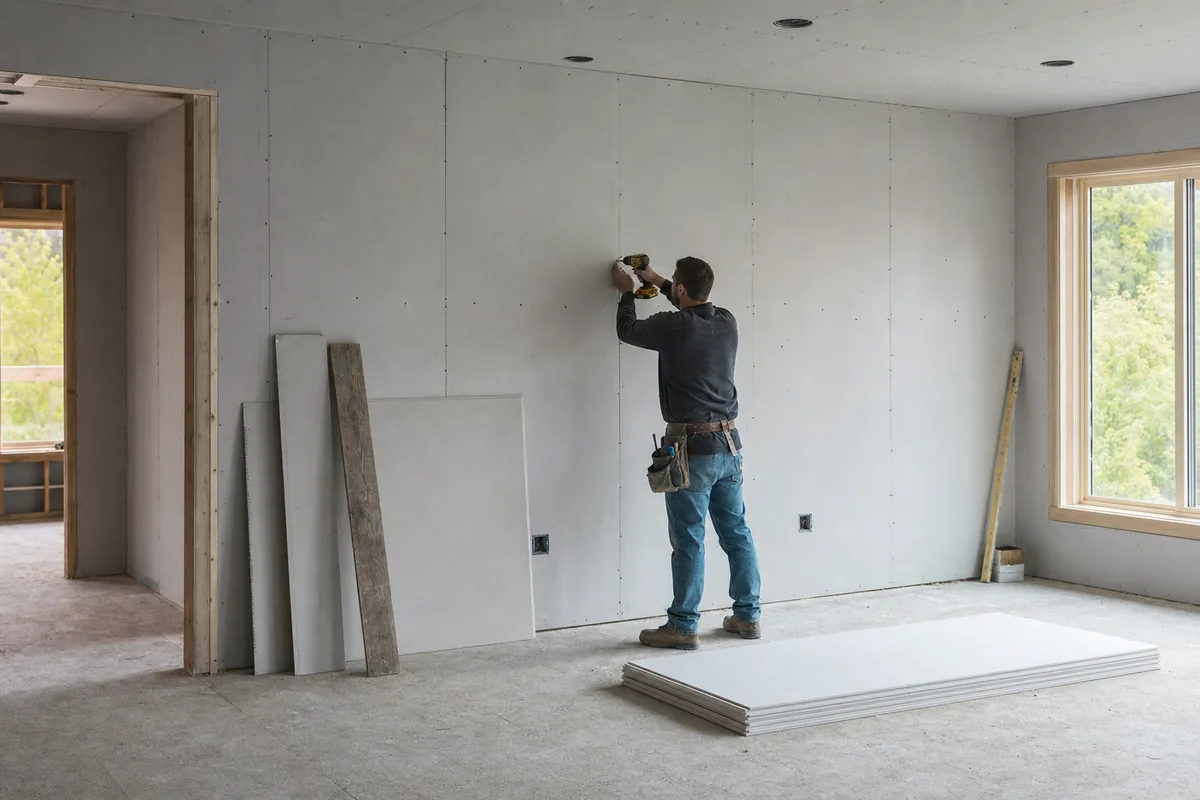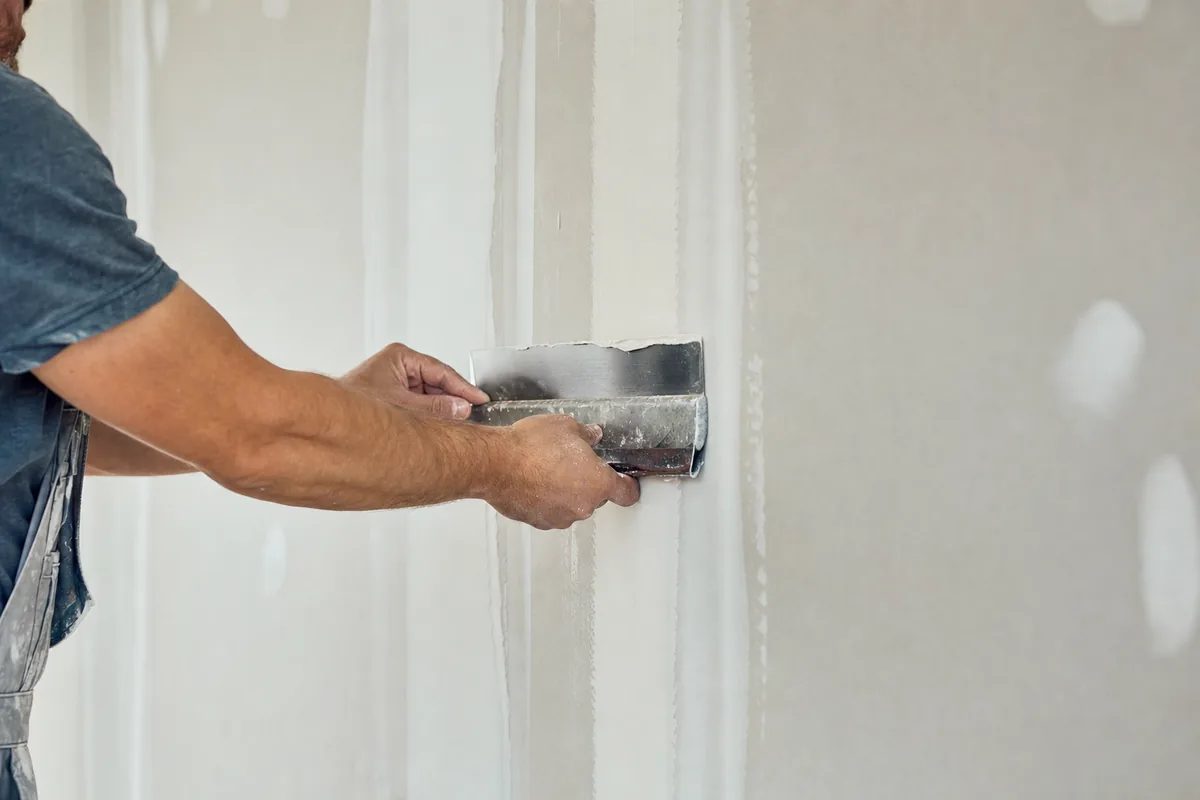
Johnson City Drywall fixes popped nails and screws in walls and ceilings across Johnson City and the Tri-Cities. A pop is a fastener that has backed out of the stud or joist behind the board and pushed a small dome of compound and paint ahead of it. Every one runs the same way. Back the loose fastener out or drive it home below the surface, set a fresh screw an inch or two off into solid framing, then two or three coats of joint compound over both dimples, feathered wide. Then sanding, then a texture match.
We work in houses, rental units and commercial spaces, on ceilings as much as walls. Standard gypsum board takes a standard screw, and moisture-resistant board in a basement or a bathroom takes the same screw and longer between coats. Many years of chasing fasteners across the Tri-Cities goes into reading a wall and telling you whether you have four pops or forty, because the count decides how the visit gets priced. Kingsport, Bristol, Elizabethton, Jonesborough, Gray, Erwin, Piney Flats and Boones Creek run on the same schedule as Johnson City itself.
Why Nail Pops Are So Common in Johnson City
Johnson City takes about 44 inches of rain a year, spread across roughly 135 days with some precipitation. The national average is nearer 38 inches. More moisture in the air for more of the year is the whole reason this town sees so many popped fasteners, because a pop starts in the framing and only finishes in the drywall. Wood studs and joists take on moisture through a humid Appalachian summer and swell. Through a dry winter with the heat running they give it back and shrink. The board is fastened to that wood and does not move with it.
Run the cycle a few years and the head of a nail or a screw works back out of the stud a fraction at a time. Joint compound is brittle, so it cracks in a ring around the head first, then lifts into the little dome in your paint. Gypsum board is a paper-faced product with a mineral core, and it trades moisture with the air as well, which loosens the grip of the paper face around the head.
Two things follow from that. Pops arrive in batches, because everything in that wall moved in the same season, so a house that shows one in November will show a dozen by spring. And a fastener that has moved once will move again if it goes back into the same tired hole, which is why the fix is a new screw into solid wood instead of more compound over the old one.
Where We Reset Popped Fasteners
Wall Pops Through Paint
The most common call we get. A row of small domes down a hallway or across a bedroom wall, often along a stud line you can trace with your hand. Reset, coated, sanded and textured.
Ceiling Pops and Fastener Lines
Overhead pops sit in a plane that light rakes across all day, so the finish matters more than it does on a wall. Same method, more setup, and pole sanding instead of hand sanding.
Pops Alongside Holes and Dents
When the same room has a doorknob hole or a shelf anchor left in it, both get handled on the one trip. See Small Hole and Patch Repair.
Pops Alongside Hairline Cracking
Popped fasteners and hairline cracks along a taped seam come out of the same seasonal movement, and they get repaired together. See Drywall Crack Repair.
Pops in Basements and Garages
Basement walls here run humid enough to justify moisture-resistant board, and garage walls shared with living space carry fire-rated board. See Basement Drywall and Garage Drywall.