
📞 (423) 820-3689
Licensed & Insured
Free On-Site Estimates
Many Years of Experience
Serving All 8 Tri-Cities Towns

Drywall Finishing & Taping in Johnson City, TN

Johnson City Drywall tapes, coats, sands and finishes walls and ceilings across Johnson City and the Tri-Cities. Flat seams, butt joints, inside angles, outside corner bead, fastener heads and the whole-surface skim coat that a Level 5 job calls for. The sequence does not change. Embed tape in a wet bed of compound, pull it tight, then a fill coat, then a finish coat feathered wide of the joint. Sand between coats, prime or skim where the paint sheen demands it, then check the whole surface under raking light before anyone calls it done.

Johnson City Drywall tapes, coats, sands and finishes walls and ceilings across Johnson City and the Tri-Cities. Flat seams, butt joints, inside angles, outside corner bead, fastener heads and the whole-surface skim coat that a Level 5 job calls for. The sequence does not change. Embed tape in a wet bed of compound, pull it tight, then a fill coat, then a finish coat feathered wide of the joint. Sand between coats, prime or skim where the paint sheen demands it, then check the whole surface under raking light before anyone calls it done.

We finish board we hung ourselves and board somebody else left standing. Houses, rental turnovers, additions, offices and finished basements. Standard gypsum takes standard all-purpose compound. Moisture-resistant board in a bath or a basement takes the same three coats and a longer wait between them. Many years and thousands of square feet of taped joints go into knowing when a coat is ready for the next one, because that judgment is most of the trade. Kingsport, Bristol, Elizabethton, Jonesborough, Gray, Erwin, Piney Flats and Boones Creek run on the same rates as Johnson City itself.

Why Finish Coats Need Real Dry Time in Johnson City

A coat of joint compound does not dry on your schedule. It dries when the air in the room lets the water out of it, and around here the air is often in no hurry. Johnson City runs about 44 inches of rain a year across roughly 135 days with some precipitation, well past the national figure of around 38 inches. In a wet stretch of June the same bed coat that would be ready in eight hours can want a full day and then some.

Compound shrinks as it gives up that water. Coat two goes over coat one on the assumption that coat one has finished shrinking. A joint recoated while the layer underneath is still damp keeps moving after the surface is closed. What you get is a sunken line down the seam, or hairline checking across the band, showing up a few weeks after the painters have gone. Nobody can sand that out. It has to be recoated.

So the honest way to run a taping job in this valley is to let the weather set the calendar instead of the other way round. We plan three coats at 8 to 24 hours apart and take the long end of that in a humid week. Box fans and open windows help on a dry day and do very little on a wet one. The air outside is already carrying what the wall is trying to give up. Running heat and moving air with the windows shut is the version that actually works in July.

Finishing and Taping Services

Flat Seam and Butt Joint Taping

Paper or mesh tape bedded in compound over every joint, then filled and finished. Butt joints get the wider feather, because there is no factory bevel to hide the build.

Inside Angles and Corner Bead

Tape folded into every inside corner, metal or paper-faced bead fastened on the outside returns, then coated so the line reads straight from end to end.

Fastener Spotting

Three coats over every screw head across the wall. Skipping one is why a wall of dimples appears the first time evening light crosses it.

Level 5 Skim Coating

A thin coat over the entire surface on top of the standard finish work, for glossy paint, dark colors and rooms full of side light.

Finishing Over Somebody Else’s Hang

Board already up and never taped, or a job left half finished. See Drywall Hanging for the step before this one.

Texture After Taping

Orange peel, knockdown and skip-trowel sprayed or troweled over finished board. See Texture Matching and Popcorn Ceiling.
Not sure what your wall actually needs?

Tell us what the damage looks like, or what needs hanging, and you get a real number and a real timeline before anything is cut.

Request a Quote

Which Finish Level Do You Actually Need?

Finish levels are a published industry standard, not a sales ladder, and paint sheen is what decides yours.

Level 3 is one coat over tape and one over fasteners, left slightly textured. It goes under heavy texture or in a garage or a warehouse, where nothing smooth is going on top of it anyway.

Level 4 is the everyday residential finish. Two compound coats over flat joints, one over the angles and three over fastener heads, sanded smooth and free of tool marks. It is right under flat paint, light texture and wallcoverings, and it covers most rooms in most houses.

Level 5 adds a full skim coat across the whole surface on top of the Level 4 work. That skim evens out the difference in porosity between bare paper and dried compound, which is the thing that makes joints ghost through gloss paint months later.

The one that costs people money is Level 4 under the wrong paint. Deep tones, eggshell and gloss, big windows on one wall, a row of recessed cans down a hallway. Any of those will find a seam that flat white paint would have hidden forever. If your paint plan belongs in that group, we say so before the tape goes on, because adding a skim coat later means masking the room a second time.

Affordable Drywall Finishing and Taping in Johnson City

Finishing is priced by the job and the surface area, and our minimum callout is $150. That floor exists because three coats means three trips at minimum, and no crew turns out repeatedly for less.

  • Small finishing work, $150 to $250: a few joints, a patched area needing tape and three coats, or spotting a wall of fasteners
  • Standard finishing work, $250 to $450: one room’s seams and angles taken from bare board to sanded, or a stretch of failed taping put right
  • Larger runs, $450 to $1,200: several rooms, a stairwell, or ceiling work needing staging and pole sanding
  • A room hung and finished together, $1,200 to $2,500: board, tape, three coats, sanding and texture as one job

A Level 5 skim adds labor and material across the full surface, so it costs more than the same room at Level 4 and takes longer to dry. Estimates are free and given on site, and the finish level goes in writing so nobody argues about it afterward.

How Long Does Finishing and Taping Take?

  • Taping and coating: 2 to 5 days for a typical room, driven by dry time
  • Sanding: 1 to 3 days
  • Texture, if you want it: another 1 to 3 days
  • A single room from bare board to paint-ready: usually 2 to 3 days of work spread across a longer calendar

Hanging is fast and finishing is not, which surprises people who watched board go up in a morning. Each of the three coats needs 8 to 24 hours before the next, so the calendar is mostly waiting. Drywall is never a one-visit job once dry time is counted. Anyone quoting you a taped, sanded, paint-ready room in a day is either skipping a coat or coating over compound that has not finished shrinking.

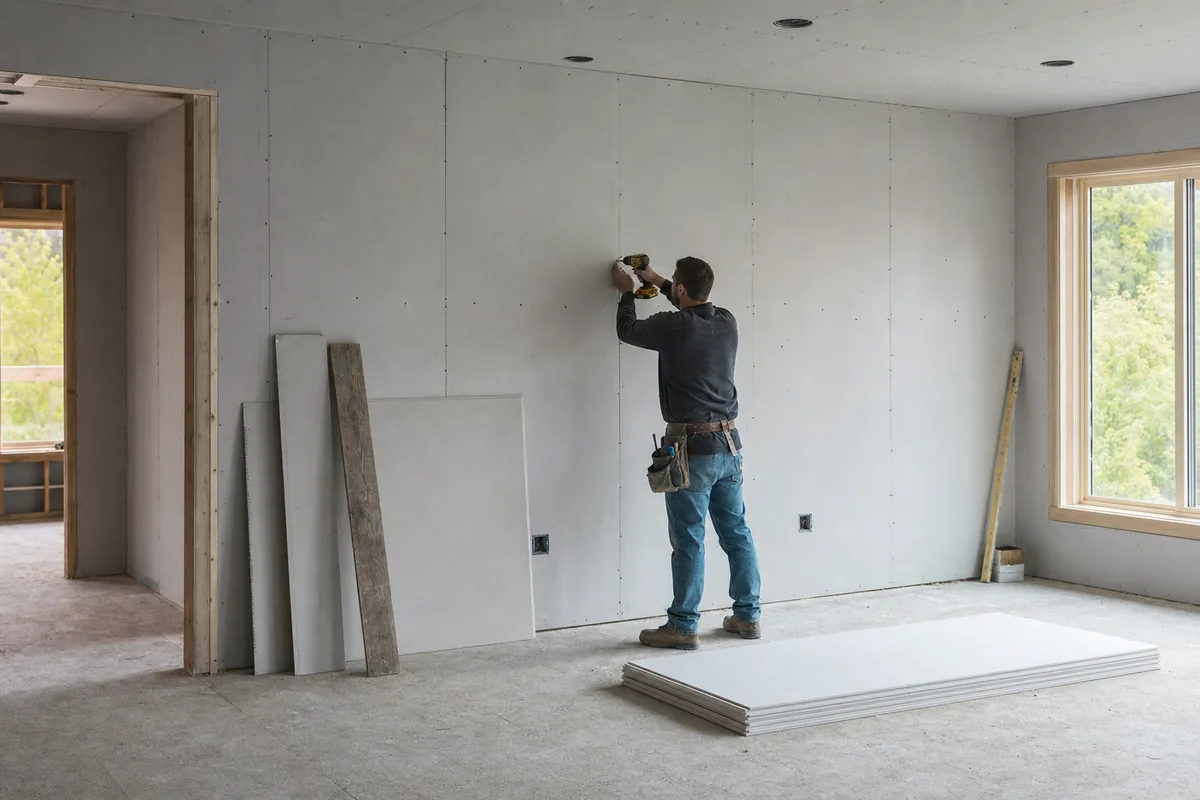
Drywall hung and ready for taping in a new room
One crew, one quote

Hanging, taping, finishing, sanding and the texture match run as one job on one schedule, rather than a hanger who leaves and a finisher who never turns up.

Floors get covered, the work area gets closed off and sanding is done with vacuum-assisted tools, so the only room that knows we were there is the one with the repair in it.

See all services

How a Finishing Job Runs, Start to Finish

Four stages, and the number of visits is on the estimate before we start.

Walking the Board and Setting the Finish Level

We look at every wall for loose sheets, overdriven screws and gaps at the angles, because finishing cannot fix a bad hang and covering one wastes your money. Then we ask what paint is going on and where the windows and fixtures sit. That answer sets Level 4 or Level 5, and the price and the visit count go in writing on site.

Masking Floors, Openings and Anything Already Finished

Taping is wet work and sanding is dusty work, so a room mid-finish is the worst room in the house to walk through. Finished floors get papered and taped at the edges. Trim, cabinets and stair rails get wrapped. Doorways get zipped shut and return-air grilles get covered so the system stops pulling grit around. Sanders run through vacuum hoses.

Tape, Fill, Finish

Tape goes into a wet bed and gets pulled down until no air is left behind it. The fill coat goes on wider, the finish coat wider still, and each one waits out the full dry time. On a Level 5 the skim goes over everything after that. Angles get run last so a coat drying in one plane does not pull the other out of line.

Raking-Light Inspection and Clean Down

The wall gets checked with a light held flat against the surface, which is how every flaw a normal ceiling fixture hides shows up. Ridges get knocked down and hollows get filled and re-sanded. Then dust comes out, masking comes off, and the room is left paint-ready unless you have asked for primer.

Drywall Finishing and Taping for Contractors and Builders

  • Scheduled Against Your Trades: we take a slot in a build calendar and hold it, because a taping crew that shows up late moves every trade behind it.
  • Consistent Level Room to Room: one crew across the whole job, so a bedroom does not arrive at a different standard than the hallway.
  • We Finish What Others Hung: taking over a stalled job is normal work for us, not an exception.
  • Licensed and Insured: coverage confirmed before a crew sets foot on your site.
  • Punch-List Ready: raking-light inspection on our own work, so your walkthrough is not the first time anybody looks properly.

Our callers are homeowners finishing an addition or a basement. General contractors and builders who need a finishing crew inside a schedule. Landlords repainting a unit that will not take another coat of paint over bad seams. Renovators who hung the board themselves and would rather hand the taping to somebody who does it daily.

What a Level 5 Finish Job Usually Looks Like

A living room gets a wall of new windows and a deep charcoal paint on the wall facing them. Level 4 would show every joint by three in the afternoon. The seams get taped and filled first, fasteners get their three spots, then a skim coat goes across all four walls once the joints have fully dried. Sanding runs off a pole with a light held low, so the sanded surface gets read as it is worked instead of afterward. Two more short visits follow: one to touch the hollows the light finds, one to check the room again at dusk. The calendar runs about a week, most of it drying, and the paint goes on a flat, even surface that gives the light nothing to catch.

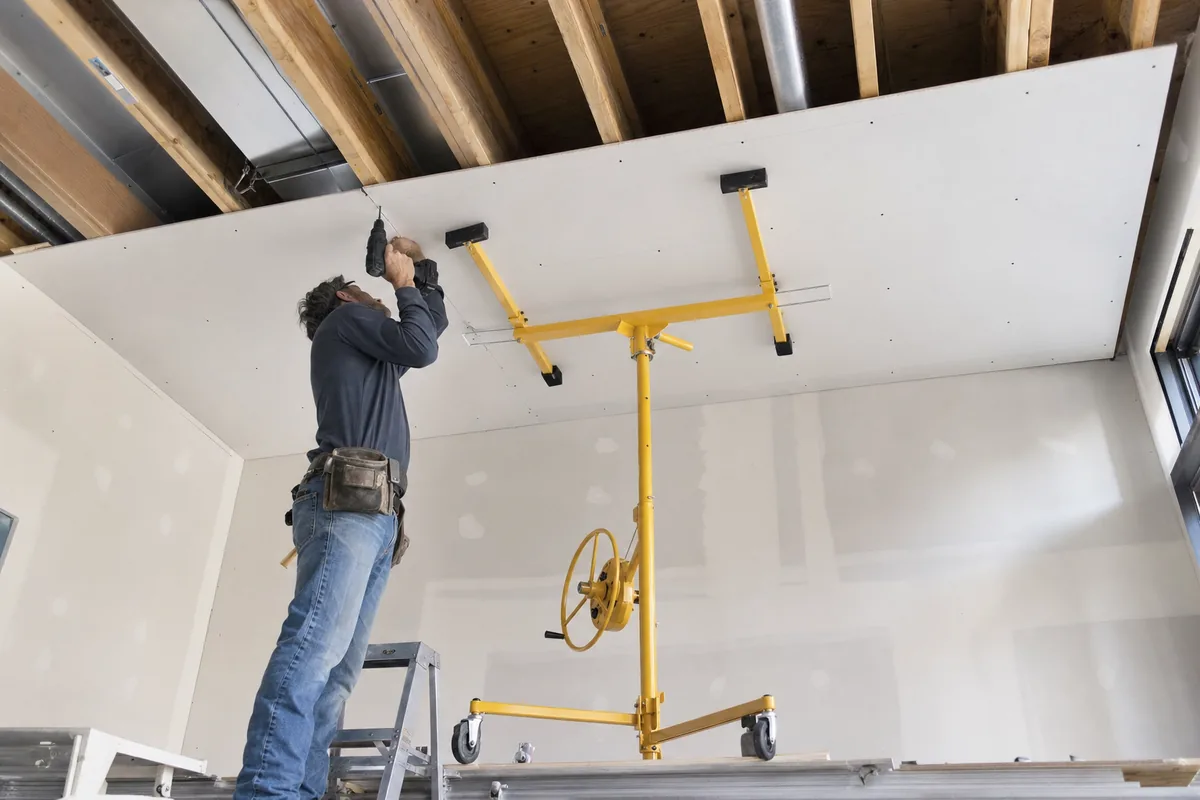
Drywall panel being fixed to ceiling joists with a panel lift
Built for how walls move here

Johnson City takes about 44 inches of rain a year. Board and framing swell through a humid summer and shrink through a dry heated winter, and that cycle is what pops fasteners and opens taped seams. The fix is the right board and enough dry time between coats.

Get a free estimate

Local Drywall Finishing Near You in the Tri-Cities

Same crew and the same rates in Kingsport, Bristol, Elizabethton, Jonesborough, Gray, Piney Flats, Erwin and Boones Creek as in Johnson City itself, with no travel charge on that list. Town detail sits on the service areas page and the rest of the trade is on the Johnson City Drywall homepage. Office and tenant finishing work belongs on the Commercial Drywall page.

Finish Your Walls the Right Way

A room taken from bare board to sanded runs $250 to $450 in most houses, and the finish level goes on the estimate before tape touches a joint. Free estimates, a masked and sealed work area, three coats with the dry time they actually need, and a raking-light check before we call it finished. Call Johnson City Drywall and tell us what paint is going on the wall.

Drywall Finishing & Taping in Johnson City, TN FAQs

What is the difference between Level 4 and Level 5 drywall finish?

Level 4 is two compound coats on flat joints, one on angles and three on fastener heads, sanded smooth. Level 5 adds a skim coat over the whole surface. Level 4 suits flat paint and light texture, Level 5 suits gloss, dark colors and strong side light.

Why do my walls show flaws under certain lighting?

Raking light from a window or a recessed fixture hits the wall at a low angle and casts a shadow off anything proud or hollow. Overhead light in the middle of a room hides the same flaw completely. A skim coat is what evens the surface out.

How much does it cost to tape and finish a room?

One room of seams and angles taken from bare board to sanded runs $250 to $450 in most houses. A room hung and finished as one job runs $1,200 to $2,500. The minimum callout on any finishing work is $150.

Does finishing take longer than hanging?

Yes, and by a wide margin. Board goes up in hours, and taping needs three coats at 8 to 24 hours apart, so the finish stage carries most of a project's calendar time.

Can you finish drywall somebody else hung?

Yes. We check the hang first for loose sheets and torn paper faces and tell you what needs fixing before tape goes on, because a finish coat cannot hold a bad sheet flat.

Do I need Level 5 everywhere in the house?

Almost nobody does. Level 5 earns its cost in rooms with gloss or dark paint and strong side lighting. Bedrooms and hallways under flat paint are fine at Level 4.

Get a Free Estimate

Tell us what the damage looks like, or what needs hanging. We come out, look at the wall, and give you a price and a timeline you can hold us to. Repairs start at $150.

Call Now Free Quote