📞 (423) 820-3689
Licensed & Insured
Free On-Site Estimates
Many Years of Experience
Serving All 8 Tri-Cities Towns

Drywall Hanging in Johnson City, TN

Johnson City Drywall hangs board on walls and ceilings across Johnson City and the Tri-Cities. Sheet layout, cut-outs for boxes and vents, ceilings first and then walls. Screws driven to a dimple that leaves the paper face intact, and seams staggered so no two joints stack in a line. Board goes up tight to the framing with the gaps at the floor where they belong, not at the ceiling line where a taper has to fill them.

Johnson City Drywall hangs board on walls and ceilings across Johnson City and the Tri-Cities. Sheet layout, cut-outs for boxes and vents, ceilings first and then walls. Screws driven to a dimple that leaves the paper face intact, and seams staggered so no two joints stack in a line. Board goes up tight to the framing with the gaps at the floor where they belong, not at the ceiling line where a taper has to fill them.

We hang for homeowners, builders, remodelers and property managers, in new rooms, additions, basements, garages and gutted houses. Half-inch standard board covers most walls and ceilings. Five-eighths Type X goes on garage assemblies shared with living space and anywhere else code calls for it. Moisture-resistant board goes in bathrooms and below grade. Thousands of square feet of hung board go into knowing where a seam should land before the first sheet leaves the stack. Kingsport, Bristol, Elizabethton, Jonesborough, Gray, Erwin, Piney Flats and Boones Creek book on the same terms as Johnson City itself.

Why Board Should Not Sit in a Damp House Before It Goes Up

Gypsum board arrives on a truck and then waits, and where it waits matters more than most people expect. Think of a stack left flat on a slab in an open garage, or one standing against a wall in a house with no power and no heat. Both drink moisture out of the air the whole time they wait. Johnson City averages about 44 inches of rain a year over roughly 135 days with some precipitation, against a national figure closer to 38. A week of waiting in July is a week of taking on water.

Swollen board does not hang flat. The edges soften first, the paper face goes slack, and a sheet that measured true on the truck bows a little between the studs. Screws sink easier than they should through soft paper, which is how a fastener ends up buried past the face with nothing left holding the board. Then the house dries out through the first heated winter, everything shrinks back, and the wall shows you the story in popped fasteners and open joints.

The way around it is dull and it works. Board gets stored flat, off the slab, inside a space that is closed in and holding roughly the temperature it will hold once people live there. We check that the framing is dry before board covers it, because wet studs behind new board have nowhere to give that moisture up except into your wall. And fasteners get set by feel and depth rather than by clutch alone. Board that softened a little in the stack takes a screw differently than a sheet delivered that morning.

Hanging Work We Take On

Whole-Room and Whole-House Hanging

New rooms, additions and gutted houses, ceilings first and then walls, cut and fastened room by room to a planned layout.

Ceiling Hanging

Overhead board carries its own weight against the fasteners all day, so it takes tighter screw spacing and a lift or a second pair of hands. See Ceiling Drywall Installation.

Fire-Rated Board on Garage Assemblies

Five-eighths Type X on garage walls and ceilings shared with living space, hung with the fastening the assembly calls for. See Garage Drywall.

Moisture-Resistant Board Below Grade and in Baths

Green board in basements and bathrooms, which in this climate is worth the difference. See Basement Drywall.

Hanging Only, Somebody Else Finishing

Board up, screwed off and ready for another crew’s tape. Common on builder jobs and for homeowners taping it themselves.

Hanging as Step One of a Full Job

Hang, tape, coat, sand and texture as a single scope. See Drywall Installation.
Not sure what your wall actually needs?

Tell us what the damage looks like, or what needs hanging, and you get a real number and a real timeline before anything is cut.

Request a Quote

Which Board Goes on Which Wall?

Four board types cover almost every room in a house, and picking wrong costs more than picking well.

Half-inch standard gypsum is the default for interior walls and most ceilings. It is what comes out of a wall during a remodel and what usually goes back in.

Five-eighths Type X is the fire-rated panel. Code calls for half-inch gypsum where a garage sits next to non-habitable space. Five-eighths Type X goes where the garage sits against habitable rooms, including the full ceiling assembly and its joists when there is living space overhead. Requirements do vary by jurisdiction, so we confirm the assembly before ordering rather than after.

Moisture-resistant board belongs in bathrooms, laundry rooms and below grade. It is not waterproof and it will not survive standing water, but it handles humid air far better than paper-faced standard board does.

Ceiling board and sag-resistant panels matter where joists sit wide or a lid is going to get sprayed texture. A half-inch panel on 24-inch centers under wet texture is how a ceiling ends up wavy between the joists.

Framing sets what the hang can do. Studs sit 16 inches on center on load-bearing walls in most jurisdictions, and 24 inches is permitted on many non-load-bearing interior walls. So what sits behind your board is not always where you would guess.

Affordable Drywall Hanging in Johnson City

Hanging is priced against square footage, and our minimum callout is $150 on any small scope.

  • Hanging and finishing together, $1.50 to $3.00 per square foot: the rate most jobs get quoted at, with both material and crew time inside it
  • A single room hung and finished, $1,200 to $2,500: board, tape, three coats, sanding and a matched finish as one job
  • A small hang, $150 to $450: one wall, a closet, a patched-in section, or board over a framed opening
  • Larger hang-only scopes: quoted against the square footage and the access, since the taping is coming out of somebody else’s scope

Access moves the number as much as area does. Stairwell walls, vaulted lids, 12-foot sheets carried up a turn in a staircase and anything worked off staging all add labor to the same square footage. Estimates are free and given on site.

How Long Does Drywall Hanging Take?

  • A single room: hanging is usually a day, and 2 to 3 days once taping and finishing follow it
  • A 1,000 square foot house or basement: 4 to 7 days overall, with 2 to 4 of those in the hang
  • A 2,000 square foot house: 7 to 10 days overall
  • A 3,000 square foot house: 10 to 14 days overall

Hanging is the fast half of this trade, which is why a room can look finished by lunchtime and still be a week from paint. Every calendar above is carrying tape, three coats at 8 to 24 hours apart, and sanding after the board is up. Drywall is never a one-visit job once that dry time is counted, no matter how quickly the sheets went on the wall.

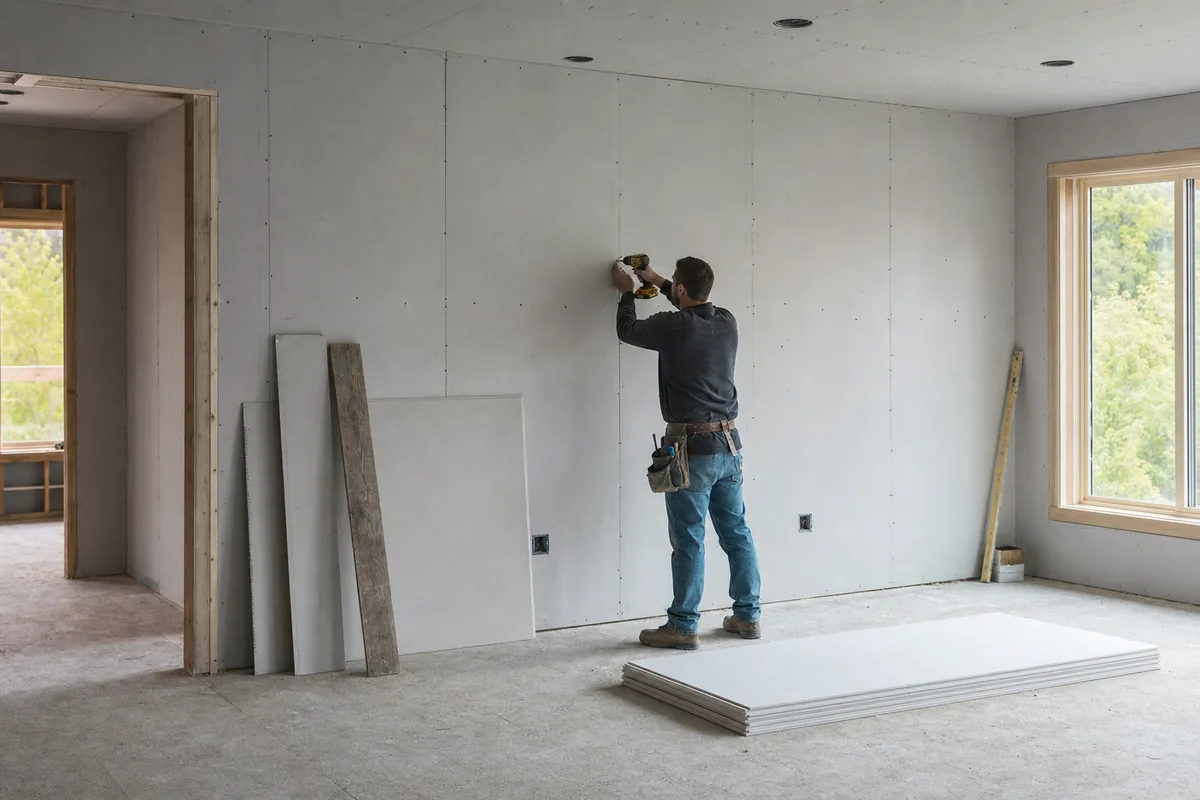
Drywall hung and ready for taping in a new room
One crew, one quote

Hanging, taping, finishing, sanding and the texture match run as one job on one schedule, rather than a hanger who leaves and a finisher who never turns up.

Floors get covered, the work area gets closed off and sanding is done with vacuum-assisted tools, so the only room that knows we were there is the one with the repair in it.

See all services

How a Hang Runs, Start to Finish

Four stages, and the schedule goes on the estimate before the first sheet is cut.

Walking the Framing and Planning the Layout

We check the framing for twist, crowning studs, missing backing at the corners and blocking where fixtures will hang, because none of that gets easier once board covers it. Then the sheet layout gets planned room by room so joints land where they cause the least finishing work. You get the board mix, the square footage and the price in writing on site.

Getting Board Into the House Without Damage

Full sheets are heavy, awkward and perfectly shaped for taking a chunk out of a door casing on the way through it. Floors get covered along the carry route, casings and stair rails get padded, and board gets stacked flat inside the conditioned space instead of leaning in a damp garage. Cutting happens in one staging area so gypsum dust stays in one room.

Cutting, Lifting and Fastening

Ceilings go up before walls so wall sheets hold the ceiling edges tight. Sheets get scored, snapped and cut to fit around boxes, vents and window returns, then fastened to studs or joists at the spacing the assembly calls for. Screws land in a shallow dimple that leaves the paper face intact. Seams get staggered so no joint from one row lines up with the row beside it, and the small gap goes at the floor.

Screw-Off Check and Site Clean Down

Before we leave, the whole hang gets a pass with a blade and a driver: overdriven screws get a partner beside them, missed studs get found, torn paper gets cut back and any sheet that moves under a hand gets refastened. Offcuts and dust leave with us, and the room is handed over ready for tape rather than ready for an argument between trades.

Drywall Hanging for Builders, Remodelers and Landlords

  • Layout Planned Before Cutting: seams placed on purpose, so the finishing crew is not paying for a hanger’s shortcuts.
  • Correct Fastener Depth on Every Sheet: dimpled, not buried, which is the difference between a flat wall and a row of pops next spring.
  • Board Stored the Way It Should Be: flat, off the slab and inside, so nothing goes up swollen.
  • Licensed and Insured: confirmed before a crew arrives on a site.
  • We Hang for Others to Finish, or Finish It Ourselves: same standard on the hang either way.

Our callers are builders on a framing-to-drywall schedule. Remodelers who need one room boarded between other trades. Landlords and property managers replacing walls in a unit between tenants. Homeowners who bought the board already and want it hung properly before they tape it themselves.

What a Single Room Hang Usually Looks Like

A bedroom addition gets framed, inspected and closed in before any board arrives. The board turns up two days ahead and gets stacked flat in the middle of the room where the air is conditioned. The ceiling goes up first, in the fewest sheets the room will take, so the lid carries the smallest number of joints. Wall sheets follow horizontally, top row first, with the cut edge to the floor and every joint staggered off the row above it. Cut-outs for the boxes and the vent get made from measurements taken twice. By the end of the day the room is boarded and screwed off, and the calendar from there belongs to tape and dry time rather than to lifting.

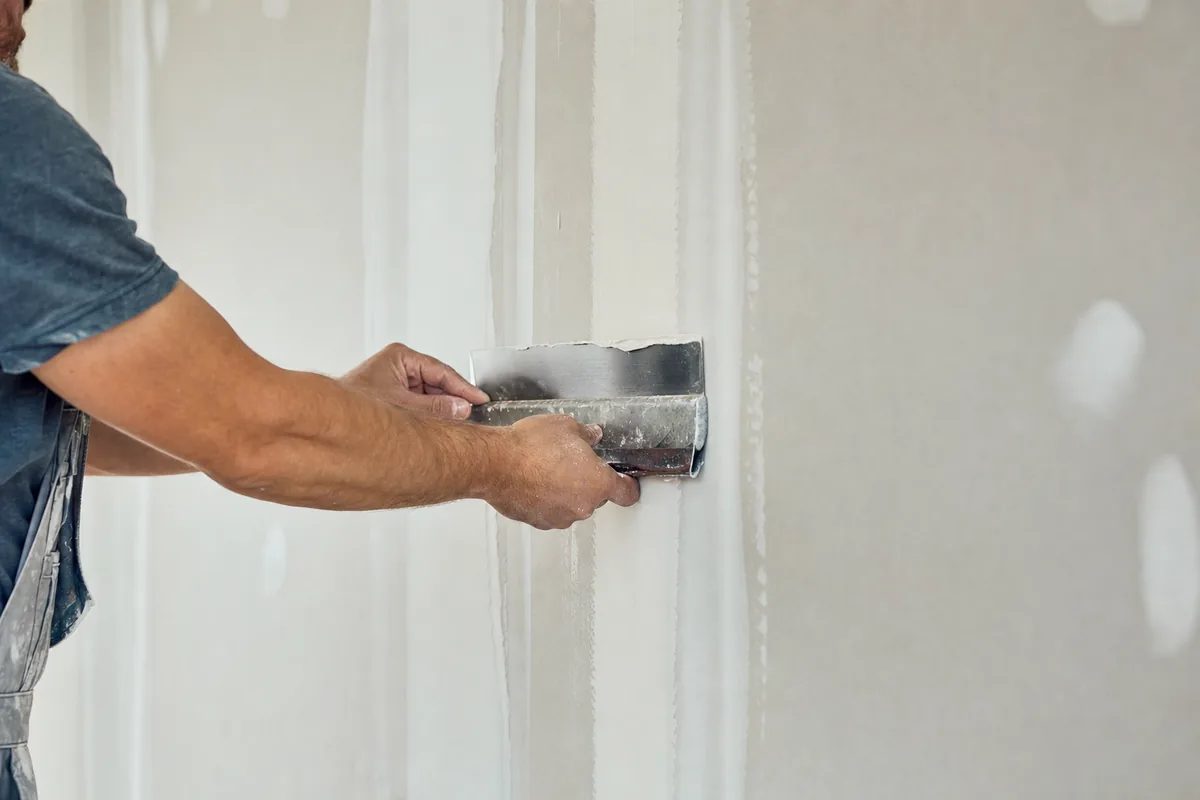
Running a taping knife along a drywall seam
Built for how walls move here

Johnson City takes about 44 inches of rain a year. Board and framing swell through a humid summer and shrink through a dry heated winter, and that cycle is what pops fasteners and opens taped seams. The fix is the right board and enough dry time between coats.

Get a free estimate

Drywall Hanging Across the Tri-Cities

Same crew and the same square-foot rates in Kingsport, Erwin, Bristol, Elizabethton, Jonesborough, Gray, Piney Flats and Boones Creek as in Johnson City itself, and no travel surcharge anywhere on that list. Town by town detail is on the service areas page, and the full trade list is on the Johnson City Drywall homepage. Board hung in an office, a retail unit or a tenant build-out belongs on the Commercial Drywall page.

Get Your Drywall Hung Right the First Time

A room hung and finished lands at $1,200 to $2,500, and hanging-only scopes get a real number on site. Free estimates, board stored the way it should be, seams planned before anything is cut, and a screw-off check before we hand the room to the tapers. Call Johnson City Drywall and tell us what is framed and when it needs to be boarded.

Drywall Hanging in Johnson City, TN FAQs

What is the difference between drywall hanging and full installation?

Hanging is getting the board up: layout, cutting, lifting and fastening. Full installation adds tape, three compound coats, sanding and texture to a paint-ready surface, which is where most of the calendar goes.

How much does drywall hanging cost in Johnson City?

Hung and finished work runs $1.50 to $3.00 per square foot, and a single room hung and finished lands at $1,200 to $2,500. A small hang-only scope starts at the $150 minimum callout and is quoted on site against the area and the access.

Do you supply the drywall or do I buy it?

Either works. We can carry the whole material order, or hang board you have already bought and stacked. Tell us which when you call so the quote is scoped correctly.

Do you hang drywall on ceilings as well as walls?

Yes, and ceilings go up first. Overhead board fights gravity against its fasteners, so it takes tighter screw spacing and usually a panel lift.

How do I know if I need standard, fire-rated or moisture-resistant board?

The room decides. Garage assemblies shared with living space take fire-rated board, bathrooms and basements do better with moisture-resistant panels, and everywhere else takes standard half-inch. We confirm each room before ordering.

Can you hang board if the framing is not perfectly straight?

Usually, and we shim or plane what needs it first. Board follows whatever is behind it, so a bowed stud left alone shows up as a wave in the finished wall.

Get a Free Estimate

Tell us what the damage looks like, or what needs hanging. We come out, look at the wall, and give you a price and a timeline you can hold us to. Repairs start at $150.

Call Now Free Quote