
📞 (423) 820-3689
Licensed & Insured
Free On-Site Estimates
Many Years of Experience
Serving All 8 Tri-Cities Towns

Commercial Drywall in Johnson City, TN

Johnson City Drywall hangs and finishes commercial gypsum board for tenant build-outs, office renovations, retail fit-outs and new commercial construction across Johnson City and the Tri-Cities. Every scope runs the same order: layout off your plans, a framing check, then hanging on walls, soffits and shafts. After that comes corner bead, tape, three coats of joint compound over every seam and screw head, then sanding to the finish level your paint needs. Partition walls, demising walls, hard-lid soffits and ceiling grid tie-ins.

Johnson City Drywall hangs and finishes commercial gypsum board for tenant build-outs, office renovations, retail fit-outs and new commercial construction across Johnson City and the Tri-Cities. Every scope runs the same order: layout off your plans, a framing check, then hanging on walls, soffits and shafts. After that comes corner bead, tape, three coats of joint compound over every seam and screw head, then sanding to the finish level your paint needs. Partition walls, demising walls, hard-lid soffits and ceiling grid tie-ins.

We work for property managers, general contractors and business owners, and we carry the board each area calls for. That means 5/8 inch Type X where fire separation applies, moisture-resistant board in break rooms and restrooms, soundproof board in offices and conference rooms, and impact-resistant board in corridors that take carts all day. Many years of commercial work goes into reading a rated wall off a set of plans before anyone opens a bundle. Same crew and the same pricing from Johnson City out through Kingsport, Bristol, Elizabethton, Jonesborough, Gray, Erwin, Piney Flats and Boones Creek.

Why Commercial Walls Take a Beating in Johnson City

Johnson City takes about 44 inches of rain a year, across roughly 135 days with some precipitation. The national average is closer to 38 inches, so this is a wetter market than most. Gypsum board is a paper-faced product with a mineral core, and it trades moisture with the air whether or not anything has leaked.

A commercial building runs the same annual cycle a house does, with a lot more surface area on the line. Board and framing take on moisture through a humid Tri-Cities summer and give it back through a dry heated winter. Repeat that every year and fastener heads pop through the paint, hairline cracks open along taped seams, and corner bead lifts at the angles. Break rooms and restrooms take it harder than an office does, which is why moisture-resistant board belongs in those rooms and standard panel does the rest of the floor.

None of that is a reason to over-spec a building. It is a reason to put rated and moisture-resistant board where the plans call for it, and to give each compound coat its dry time. A finish rushed through a humid week is a finish your tenant will be looking at again next year.

Commercial Drywall Services

New Construction and Tenant Build-Outs

Full drywall scope for a new commercial shell or a tenant fit-out, from layout through final sanding. A ground-up house or a whole-home job is on our New Construction & Whole Home Drywall page.

Office and Retail Renovation

Renovation work on floors that cannot close, with after-hours and phased scheduling. Walls come down in sections and go back up the same way, so the space stays usable.

Fire-Rated Partition and Demising Walls

Rated walls built to the assembly on the drawings, with 5/8 inch Type X board where fire separation applies. Garage and house separation on the residential side is on our Garage Drywall page.

Suspended Ceiling and Grid Drywall

Drywall soffits, hard-lid ceilings and grid tie-ins, sequenced with the electrical and HVAC work above the ceiling line. See Ceiling Drywall Installation for how overhead work differs.

Finishing and Taping to Level 4 or Level 5

Taping and three-coat finishing on walls somebody else hung, including a full skim coat where the paint calls for it. Detail on the Drywall Finishing & Taping page.

Turnover Patching Between Tenants

Doorknob holes, anchor holes and corridor scuffs patched and textured before the next tenant walks it. Residential patch work is on the Drywall Repair page.
Not sure what your wall actually needs?

Tell us what the damage looks like, or what needs hanging, and you get a real number and a real timeline before anything is cut.

Request a Quote

Which Commercial Job Are You Actually Booking?

Four scopes get called commercial drywall, and they do not price the same way.

A shell build is an empty box with no tenant in it yet. Nobody is working around you, sheets come off the truck onto an open floor, and the square-foot rate sits at the bottom of the range.

A tenant fit-out goes into a finished shell to somebody’s plan. Partition layout, rated demising walls and ceiling grid all land in the same few weeks, so sequencing with the other trades drives the calendar more than the drywall does.

A renovation in an occupied space is the expensive one, and the reason is access rather than board. The work happens after hours or in phases, containment goes up and comes down every night, and the same square footage takes longer.

Anything involving an older ceiling is the one worth a second look before demolition starts. Popcorn and sprayed ceilings from before the 1990s may contain asbestos, and that gets tested before anything is disturbed. Abatement is licensed specialty work and we refer it out. Structural cracking is the same answer: we are drywall contractors and not engineers, so if a crack pattern points past cosmetic you hear it before we cover it.

What Commercial Drywall Costs in Johnson City

Commercial drywall runs $1.50 to $3.50 per square foot installed across most scopes, and a plain partition with a standard finish sits nearer $2.26 to $2.69 per square foot. Specialty board moves the number. Fire-rated board runs $1.60 to $3.50 per square foot, and soundproof board runs $3.55 to $7.50 per square foot, because a sound wall is a whole assembly and not a single panel. Patch and turnover calls carry the same $150 minimum callout as our residential work, since a patch needs one visit to fill it and another to finish it once the compound is dry. Ceiling height, scaffolding, night work and phased mobilization all add labor to identical square footage. Estimates are free and given on site, off your plans.

How Long Does a Commercial Project Take?

We will not put a day count on your job before we have seen the plans and your project schedule, and these are the things that move it:

  • Total square footage and ceiling height: hanging days scale with both
  • How many walls and partitions: an open floor hangs faster than the same footage cut into offices
  • Ceiling grid and above-ceiling trades: electrical and HVAC go in and get inspected before the lid closes
  • Inspection scheduling: a rated assembly is looked at before it gets covered
  • Compound dry time: 8 to 24 hours between each of three coats, longer in a humid week

Active labor is a smaller share of the calendar than most people expect. No amount of crew size shortens the dry time between coats, and sanding, the final coat and the punch list all sit behind it. That is why a schedule that looks tight on paper slips when the humidity climbs, and why we would rather give you a real date after the walkthrough.

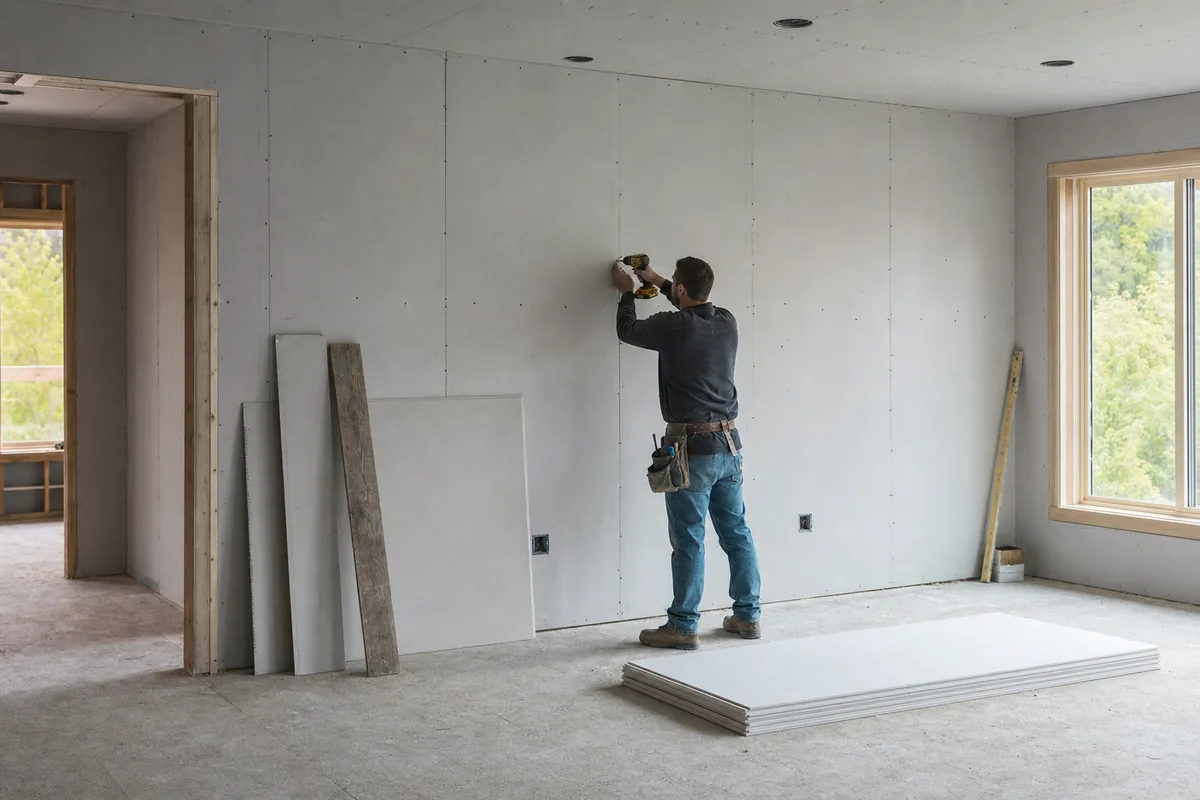
Drywall hung and ready for taping in a new room
One crew, one quote

Hanging, taping, finishing, sanding and the texture match run as one job on one schedule, rather than a hanger who leaves and a finisher who never turns up.

Floors get covered, the work area gets closed off and sanding is done with vacuum-assisted tools, so the only room that knows we were there is the one with the repair in it.

See all services

How a Commercial Job Runs, Start to Finish

Four stages on every commercial scope, whether it is one demising wall or a whole floor of offices, and you will know which one we are in.

Plans, Walkthrough and a Written Estimate

We read the drawings first, then walk the space with you. What we are looking for is which walls are rated, where the moisture-resistant and impact-resistant board belongs, what the ceiling grid is doing, and which trades have to be finished before we hang. You get board types by area, the square-foot rate, the finish level and the phasing plan in writing before anything is ordered. On an occupied space that estimate also names the hours we work and the nights we are out of your way.

Containment and Protecting the Space

Drywall sanding makes fine dust that travels, and in a leased building it travels into somebody else’s suite. Floors get covered, the work zone gets closed off with poly and zip doors, and vents in the area get sealed so the return air is not carrying dust across the floor. Sanding is done with vacuum-assisted sanders instead of dry sanding into the room. On phased work the containment comes down and goes back up every shift.

Hanging, Rating and Three Coats

Sheets get laid out to keep seams off the light and off door corners, then fastened to the framing on the pattern the assembly calls for. Rated walls get their board carried tight to the deck where the drawings say so. Then corner bead, tape, and three coats of joint compound over every seam and screw head, each coat wider than the last, with dry time between them. Sanding takes the wall to Level 4, or to Level 5 with a full skim coat where the paint and the lighting need it.

Inspection, Final Check and Cleanup

Rated assemblies get looked at before anything covers them, and we schedule around that rather than working ahead of it. Once the compound is cured we check the walls under the lighting the space actually uses, because a flat spot invisible at midday shows up under a lamp at night. Then the containment comes down, the dust goes out, and we walk the space with you. Walls leave paint-ready unless you have asked us to prime them.

Why Choose Johnson City Drywall for Commercial Drywall

  • Many Years of Commercial Work: rated partitions, shafts, soffits and hard-lid ceilings on occupied floors, hundreds of jobs’ worth.
  • Code Settled at the Walkthrough: board types and rated assemblies decided off the plans, not discovered at inspection.
  • Work That Fits Your Hours: after-hours and phased scheduling so an operating business keeps its doors open.
  • Sequenced With Your Other Trades: we work off the project schedule alongside electrical, HVAC and framing.
  • A Contained Work Area: poly and zip doors, sealed vents, vacuum-assisted sanding, and the dust gone when we are.
  • Finish Level Named Up Front: Level 4 or Level 5 decided by the paint and the lighting, and written into the quote.

Our callers are property managers and general contractors, landlords turning over a suite, retail and restaurant owners, office and medical tenants, church and school facility managers, and builders who need a drywall crew that holds a date.

What a Tenant Build-Out Usually Looks Like

An open shell suite gets divided into offices, a conference room, a break room and a restroom. Framing goes up to the plan, then the rated demising wall between suites gets its 5/8 inch Type X carried tight to the deck. Moisture-resistant board goes in the break room and the restroom, soundproof board goes around the conference room, and standard panel does the rest. Hanging is the fast part. The calendar goes to three coats of compound with dry time between each, the ceiling grid landing after the electrical and HVAC rough-in, and the rated wall waiting on an inspection before it gets closed. The suite comes back to you paint-ready at Level 4, with Level 5 in the conference room if it is going dark or glossy.

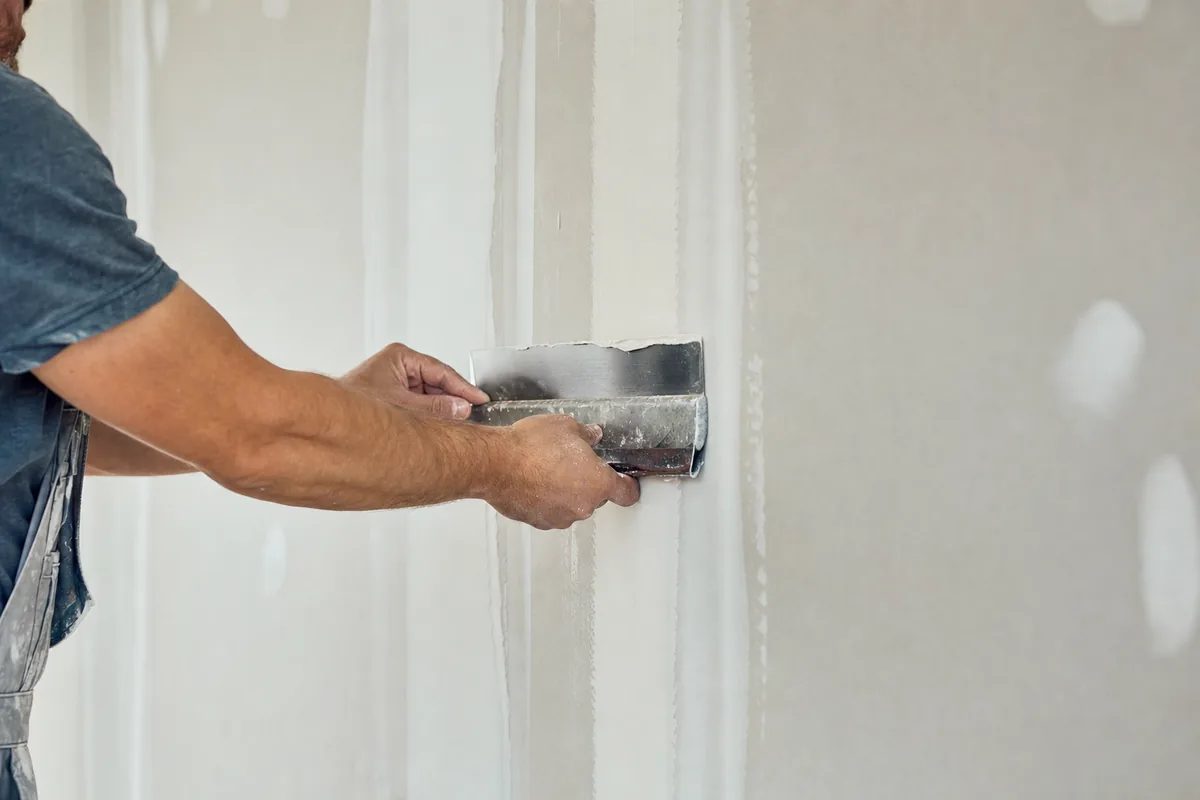
Running a taping knife along a drywall seam
Built for how walls move here

Johnson City takes about 44 inches of rain a year. Board and framing swell through a humid summer and shrink through a dry heated winter, and that cycle is what pops fasteners and opens taped seams. The fix is the right board and enough dry time between coats.

Get a free estimate

Commercial Drywall Across the Tri-Cities

Same crew and the same square-foot pricing in Kingsport, Bristol, Elizabethton, Jonesborough, Gray, Erwin, Piney Flats and Boones Creek as in Johnson City itself, with no travel surcharge on that list. Retail strips, office suites, clinics, restaurants, warehouses and church buildings all sit inside that radius. Full detail by town is on the service areas page, and the rest of what we do is on the Johnson City Drywall homepage.

Home projects run on a different page. See Drywall Installation for hanging and finishing, and Drywall Repair for patches, cracks and water damage.

Licensing on Larger Commercial Jobs

Tennessee requires a full state Contractor’s License on any job of $25,000 or more, with no county exceptions, and drywall falls under the Building Combined classification. Plenty of tenant build-outs and full office renovations clear that line on their own. Smaller thresholds work differently: work under $3,000 needs no state license, and the $3,000 to $24,999 tier only triggers a Home Improvement License in certain named counties, which Washington County is not one of. If you are a GC or a property manager pulling the permit, this is already in your process, and it is still worth confirming who holds what on a multi-trade job before work starts.

Keep Your Commercial Project on Schedule

Commercial drywall here runs $1.50 to $3.50 per square foot, and you get your number off the plans before anyone mobilizes. Free estimates, a contained work area, rated assemblies built to the drawings, and a finish level agreed before the first coat goes on. Call Johnson City Drywall with your scope and your dates.

Commercial Drywall in Johnson City, TN FAQs

How much does commercial drywall cost per square foot?

Commercial drywall runs $1.50 to $3.50 per square foot installed, with a plain partition and a standard finish nearer $2.26 to $2.69 per square foot. Fire-rated board runs $1.60 to $3.50 per square foot.

What drywall goes in a fire-rated wall?

5/8 inch Type X gypsum board is the standard for rated partition and separation walls. The exact assembly depends on what sits on either side of the wall, which is why we read it off the drawings instead of guessing at the walkthrough.

Can you work after hours or in phases?

Yes. Night work and phased shifts are normal on occupied floors, and containment goes up and comes down each shift so the space is usable the next morning.

Do you install soundproof drywall in offices and conference rooms?

Yes. Soundproof board runs $3.55 to $7.50 per square foot, which is higher than standard panel because the whole assembly is doing the work.

Do you work with general contractors on new commercial builds?

Yes. We work off the GC's project schedule alongside electrical, HVAC and framing, and we hold our dates on it.

Does a commercial drywall job need a licensed contractor in Tennessee?

Any job of $25,000 or more requires a full Tennessee Contractor's License, statewide, with no county exception. Below that the answer depends on the county and the job size.

How long does a commercial drywall project take?

It depends on square footage, partition count, ceiling grid work and inspection scheduling, so we date it after the walkthrough. Compound needs 8 to 24 hours of dry time between each of three coats, and that sets the floor on any timeline.

Get a Free Estimate

Tell us what the damage looks like, or what needs hanging. We come out, look at the wall, and give you a price and a timeline you can hold us to. Repairs start at $150.

Call Now Free Quote