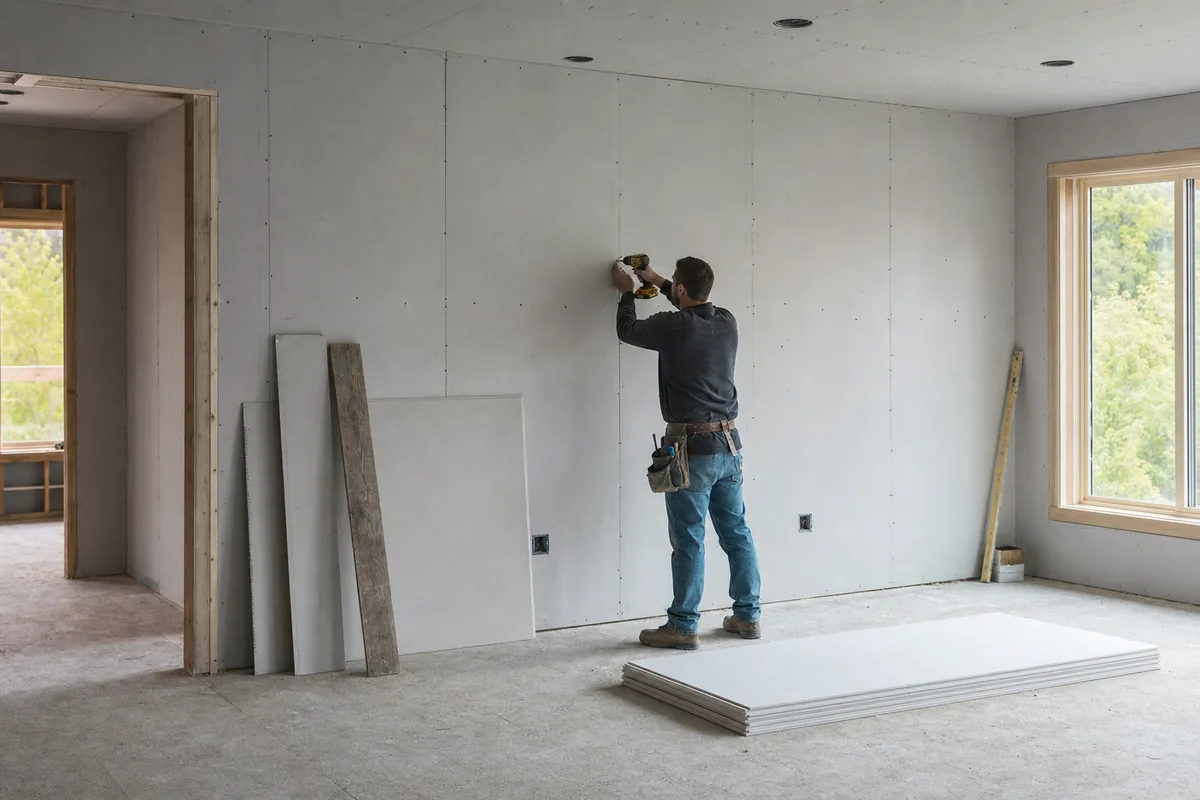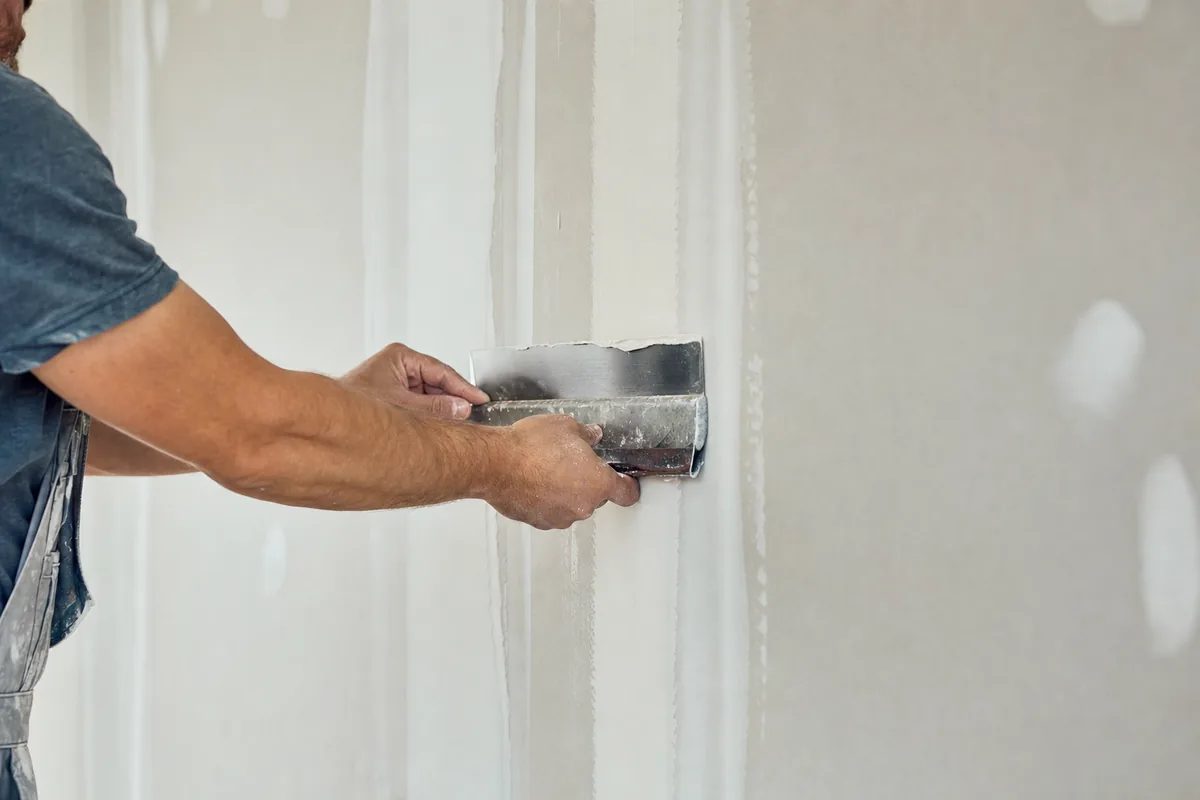
Johnson City Drywall repairs cracked walls and ceilings across Johnson City and the Tri-Cities. Hairline lines along a taped seam, splits where corner bead meets an inside angle, settlement cracks running off a door head. Also the ones that have been filled twice already and keep opening in the same place. Every crack runs the same sequence. Open the line up, cut out the tape that has let go, then bed fresh paper or mesh tape in wet compound. Two or three coats follow, each feathered well past the original line, then sanding and a texture match.
We work in houses, rental units, offices and finished basements, on ceilings as often as walls. Standard gypsum board takes standard tape and compound. Moisture-resistant board in a bathroom or a basement takes the same tape and a longer wait between coats. Many years of chasing cracks across this valley goes into reading the pattern before anybody opens a bucket. A line that follows a joint and a line that runs diagonally off a window corner are two different conversations. Kingsport, Bristol, Elizabethton, Jonesborough, Gray, Erwin, Piney Flats and Boones Creek book on the same terms as Johnson City itself.
Why Taped Seams Open Up in Johnson City
A crack that runs dead straight for four feet and then stops is not your house coming apart. It is the joint between two sheets of board doing exactly what the calendar told it to do. Johnson City sees about 44 inches of rain a year across roughly 135 days with some precipitation. The national figure is nearer 38 inches, so the air here carries moisture for most of the year. Board and framing take that moisture on through an Appalachian summer and swell a fraction. Come January the furnace runs, indoor air dries right out, and every one of those pieces gives it back and shrinks.
A taped joint is the least forgiving line on any wall. Two panel edges meet there under compound that has almost no stretch in it, so when the sheets either side move even slightly the compound has nowhere to go except apart. Inside corners fare worse, because two planes pull against a single bead of tape at the angle. Repeat that over a few winters and the hairline you can only catch in raking light turns into a line you can feel with a fingernail.
Two things follow from all of that. Cracks show up on a seasonal schedule, so a hallway that looked clean in September starts showing lines by February, and they arrive in groups because everything in that wall moved together. And a crack filled with compound alone reopens in the same spot, because filler carries no tensile strength across a moving joint. Bedded tape carries it. So the honest fix puts bonded tape back across the joint instead of buttering more mud over the top of it.
Cracks We Repair
Seam and Butt Joint Cracks
The straight-line crack, running with the board rather than across it. Old tape comes out and a fresh bedded joint goes in.
Inside Corner and Corner Bead Cracks
Splits at wall-to-wall and wall-to-ceiling angles, plus metal or paper-faced bead that has lifted away from the framing. Re-taped, re-coated and re-sanded.
Settlement Cracks at Doors and Windows
Short cracks running out of an opening corner at an angle. Cosmetic in most houses, worth a closer look in a few, and you hear which one yours is before it gets covered.
Cracks Alongside Popped Fasteners
Lines along a seam and domes along a stud come from the same seasonal movement and get quoted as one job on one schedule, rather than as two separate callouts. See Nail Pop Repair.
Ceiling and Overhead Cracks
Overhead joints carry the weight of the board itself while they move, so they open wider and show more. See Drywall Repair for the wider repair range.
Cracks Left Behind by a Leak
A stained crack usually means the board around it is spent. See Water Damage Drywall Repair.